SATO Wataru Laboratory
Receiving human and android facial mimicry induces empathy experiences and oxytocin release
(Hsu, Minato, Shimokawa, & Sato: Comput Hum Behav Rep)
Receiving facial mimicry enhances subjective empathic experiences.
However, few studies have investigated its effect on hormonal responses.
Likewise, few studies on facial mimicry by robots that could induce subjective and hormonal responses have been conducted.
We hypothesized that individuals�f perceptions of facial mimicry by humans and human-like robots could induce empathic experiences and oxytocin release.
We conducted two experiments, in which participants performed various scenarios facing one and then the other of two judges: only one mimicked participants�f facial expressions in most trials.
In Experiment 1, 62 female participants were tested with female human confederates, while in Experiment 2, 56 female participants were tested with female android judges.
As a result, the mimicking human and android judges were rated as more empathetic and personable, and increased salivary oxytocin levels.
Partial correlation showed that the android judge�fs human likeness is a unique predictor of salivary oxytocin increase in human?android interaction.
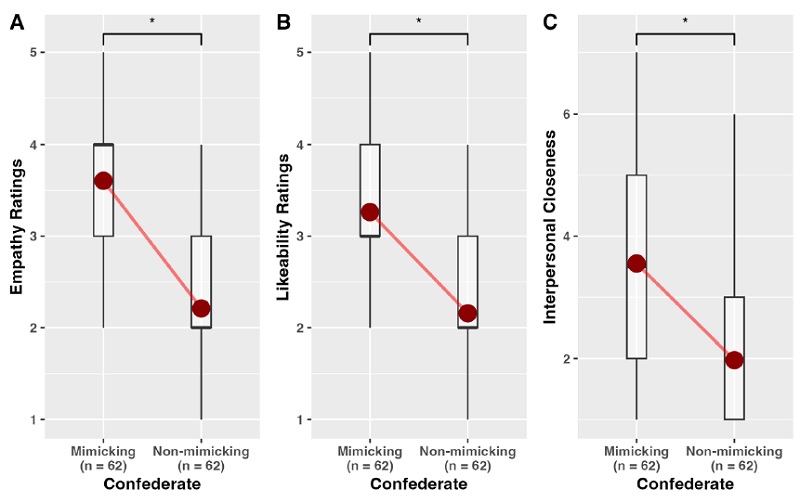
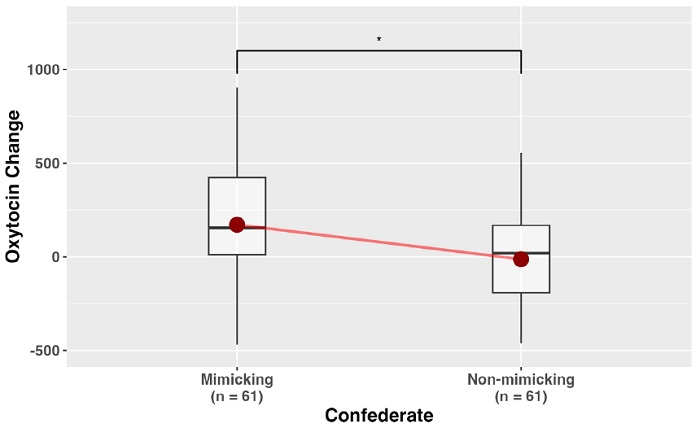
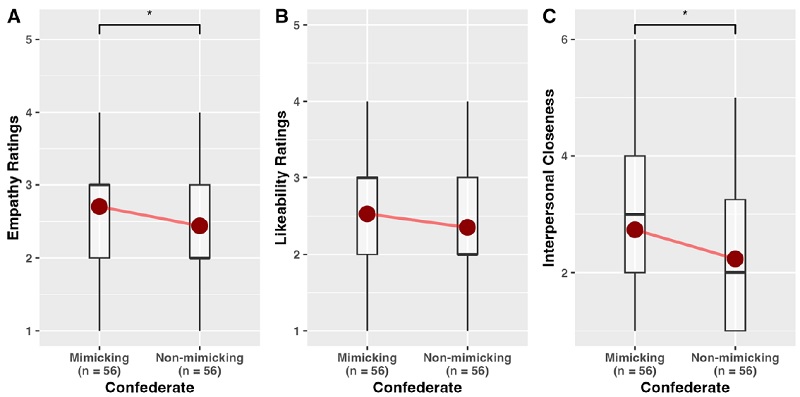
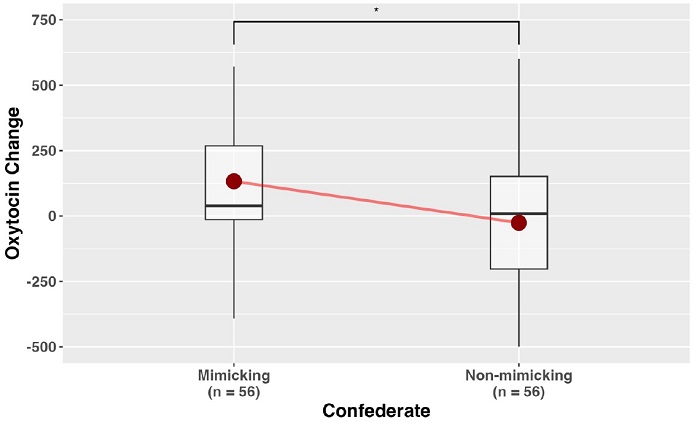
These data suggested that receiving human mimicry could facilitate subjective and hormonal empathic responses.
Furthermore, even android mimicry could elicit comparative responses, implicating that android mimicry could be very helpful in expressing empathy, enhancing social bonding with users, and improving interaction quality.
Return to
Recent Research.
Return to
Main Menu.