SATO Wataru Laboratory
Ear thermography as a candidate dynamic index of sympathetic and parasympathetic activity
(Sato, Tang, & Shimokawa: Sensors)
Monitoring the activity of the autonomic nervous system, including the sympathetic and para-sympathetic divisions, plays a crucial role in studying emotional processing.
However, few methods allow dynamic tracking of parasympathetic activity.
Here, we propose a testable hy-pothesis that ear thermography may serve as a dynamic index of sympathetic and parasympathetic activity, with a time resolution of seconds.
Anatomical and physiological evidence suggests that the vascular structures of the ear may be innervated in a region-specific manner by the autonomic nervous system, with the posterior regions (e.g., the helix) predominantly influenced by sympathetic activity and the anterior regions (e.g., the tragus) potentially affected by parasympathetic mechanisms.
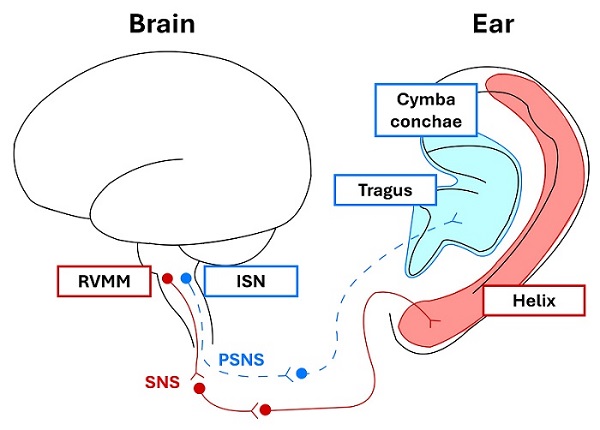
Recent thermographic studies during emotional film viewing have demonstrated distinct spatial and functional patterns: posterior regions showed a linear negative association between temperature and emotional arousal, consistent with sympathetic vasoconstriction, whereas anterior regions exhibited a non-linear (inverted-U-shaped) relationship, resembling known non-monotonic characteristics of parasympathetic activity.
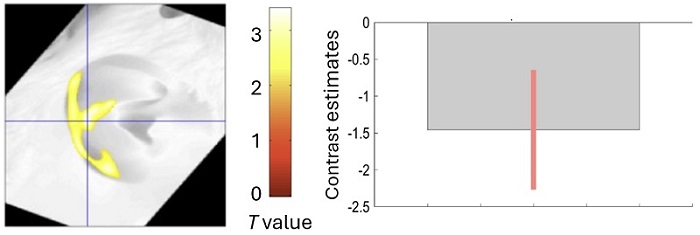
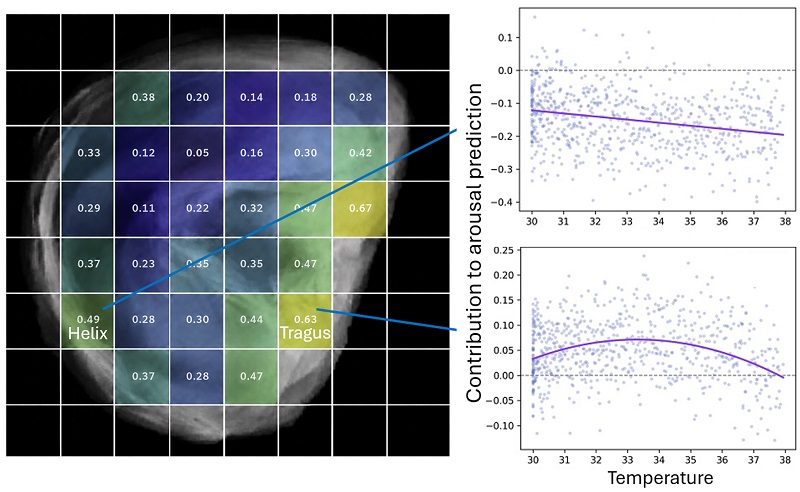
These findings suggest that ear thermography may be used to assess sympathetic- and parasympathetic-related dynamic processes, although direct evidence remains to be established.
Return to
Recent Research.
Return to
Main Menu.