SATO Wataru Laboratory
Virtual flood experience enhances preparedness through emotional and neural engagement
(Fujimi, Kochiyama, Sato, & Watanabe: Risk Anal)
As climate change intensifies flood risks, strengthening individual preparedness is essential for sustainable societies.
This study tested whether first-person three-dimensional computer graphics (3DCG) flood videos can complement official flood maps in motivating preparedness.
We used these materials as operationalizations of experiential and descriptive information, respectively.
In a preregistered web experiment with 1,000 participants, those who viewed flood videos showed a small but statistically significant increase in preparedness intentions compared with those who viewed flood maps.
Mediation analyses showed that, among the measured psychological variables, only fear had a significant indirect effect, suggesting that stimulus-evoked fear helped explain this increase.
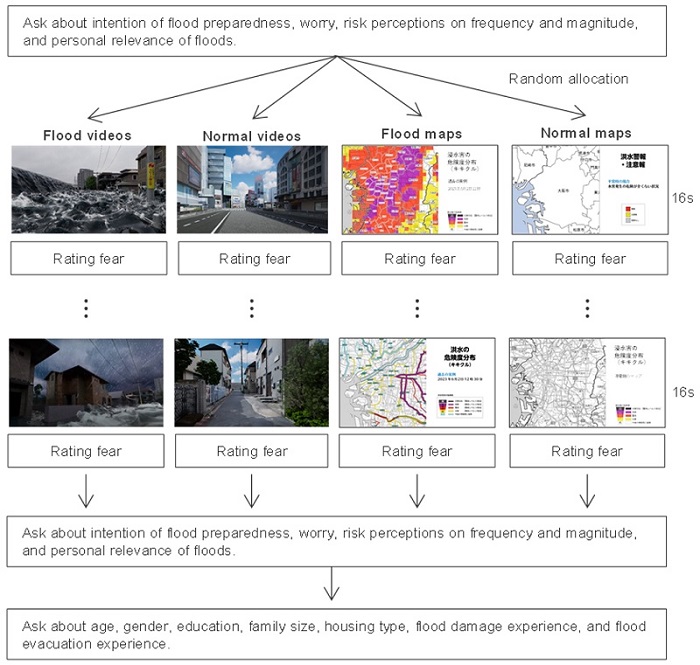
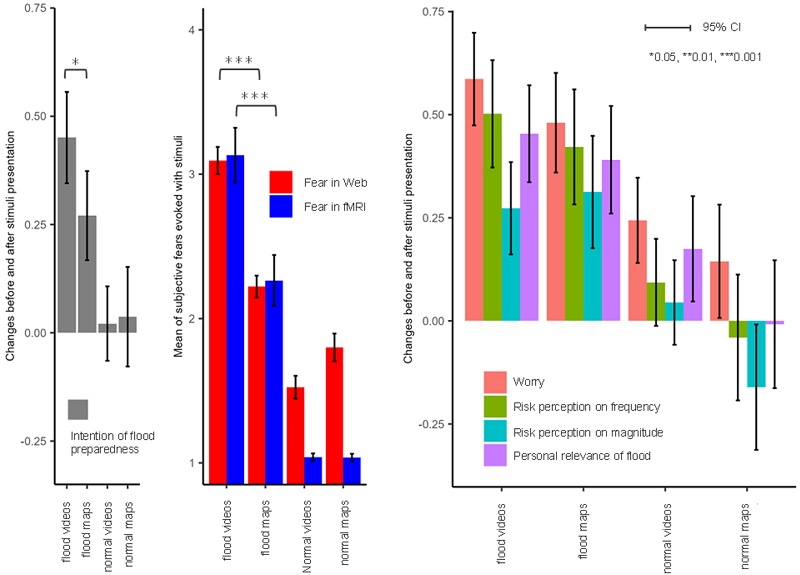
We also conducted a functional magnetic resonance imaging (fMRI) study with 45 participants using a within-subjects design.
Flood videos elicited greater right amygdala activation than flood maps, consistent with fear-related processing.
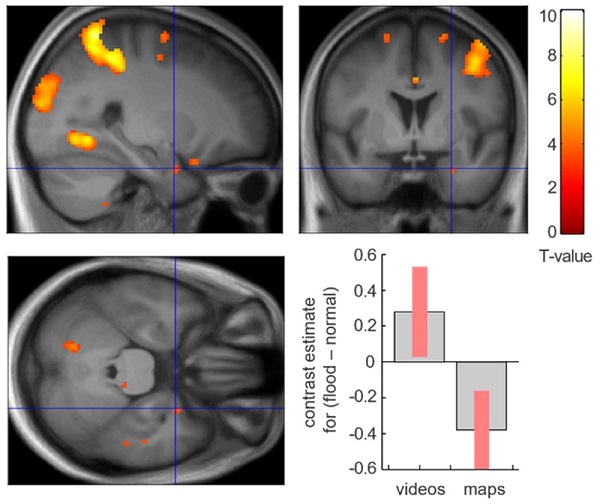
Together, these findings provide convergent behavioral and neural evidence that first-person 3DCG flood videos evoke stronger fear-related responses than flood maps and that subjective fear helps account for their effect on preparedness intentions.
The results suggest that visually vivid flood videos may complement map-based communication by increasing emotional salience and promoting flood-preparedness intentions.
Return to
Recent Research.
Return to
Main Menu.